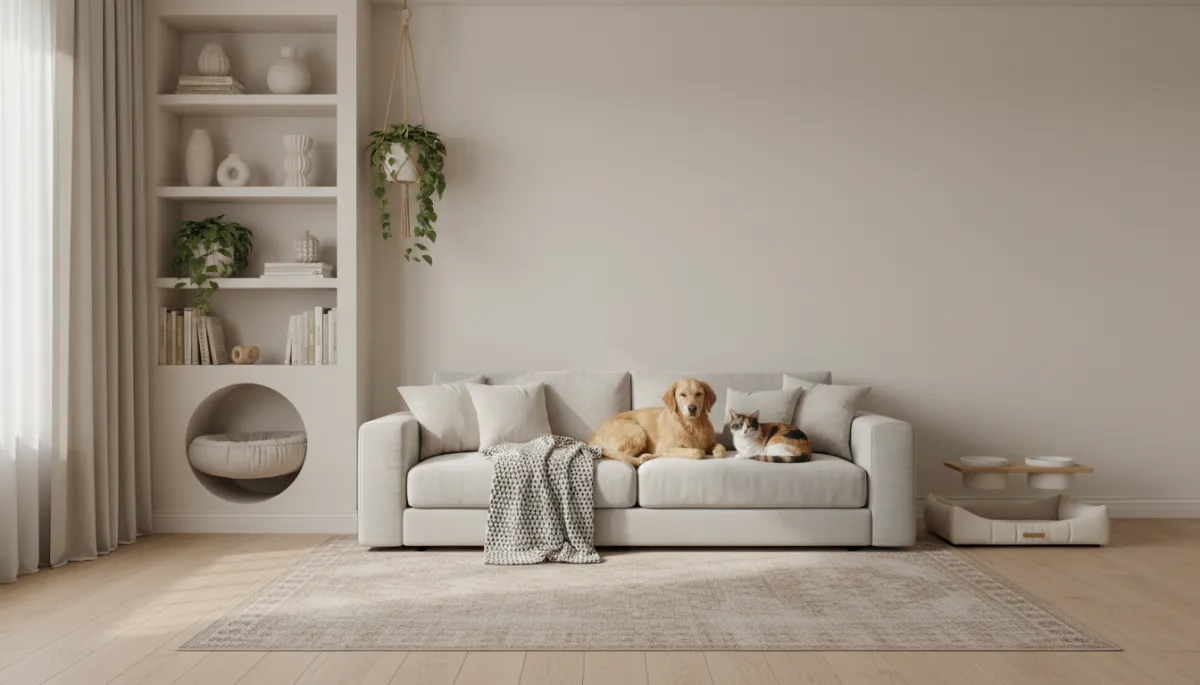
Pet-Friendly Home Decor: Style Meets Comfort
Home Decor, Pet-friendly Design
Creating a Pet-Friendly Home Without Sacrificing Style
Sharing your home with a furry friend should feel joyful, not like a constant battle against fur, scratches, and chewed corners. The good news is that you can absolutely have a beautiful, design-forward space and a happy, comfortable pet at the same time. With a bit of planning, smart pet-friendly design, and thoughtful choices, your home can be both stylish and truly practical for life with animals.
Start With a Pet-Friendly Design Mindset
Before you buy another throw pillow or repaint a wall, it helps to think about your home from your pet’s point of view. Decorating with pets is not just about hiding the litter box or choosing a darker sofa. It is about creating a space where your pet can move comfortably, feel safe, and follow their natural instincts—without wrecking your decor in the process.
Ask yourself a few questions as you plan your pet-friendly design:
Where does my pet naturally like to sleep, play, and watch the world go by?
Which areas of the house see the most activity, dirt, and fur?
Are there any current trouble spots—like scratched doors or chewed chair legs—that point to unmet needs?
When you design with these answers in mind, you start to anticipate behavior instead of constantly reacting to it. That shift alone makes it much easier to balance style and practicality in every room.
Choosing Pet-Friendly Materials That Still Look Chic
One of the biggest keys to a beautiful, low-stress home with animals is choosing the right pet-friendly materials. You do not need to cover everything in plastic or resign yourself to furniture you do not love. Instead, look for fabrics, finishes, and surfaces that are durable, easy to clean, and forgiving of everyday wear and tear—while still fitting your warm, neutral aesthetic.
Upholstery That Works With Fur, Not Against It
For sofas and chairs, skip delicate fabrics like silk or loose-weave linens. Instead, look for:
Performance fabrics: Many brands now offer stain-resistant, water-repellent textiles that mimic the look of linen, velvet, or tweed while standing up to claws and spills.
Tight weaves: Fabrics with a tight, smooth weave are harder for claws to snag and easier to vacuum clean of fur.
Mid-tone neutrals: Very light or very dark upholstery tends to show fur and everyday marks. Warm mid-tone grays, taupes, and camel tones are more forgiving and still look elevated.
💡 Friendly Tip: If you already own a sofa you love, consider a custom slipcover in a washable, pet-friendly fabric. It protects your investment and lets you refresh your look seasonally.
Floors and Rugs That Welcome Paws
Flooring is another place where pet-friendly materials make a huge difference. If you are renovating, consider scratch-resistant options like luxury vinyl plank, tile, or sealed concrete in warm, earthy tones. If you have hardwood, adding area rugs can protect high-traffic zones and soften the space for both you and your pet.
Choose low-pile or flatweave rugs so claws do not get caught and vacuuming is easier.
Look for indoor–outdoor or washable rugs in warm neutrals with subtle patterns to disguise minor stains and shedding.
Add a non-slip rug pad underneath for safer zoomies and better comfort on joints.
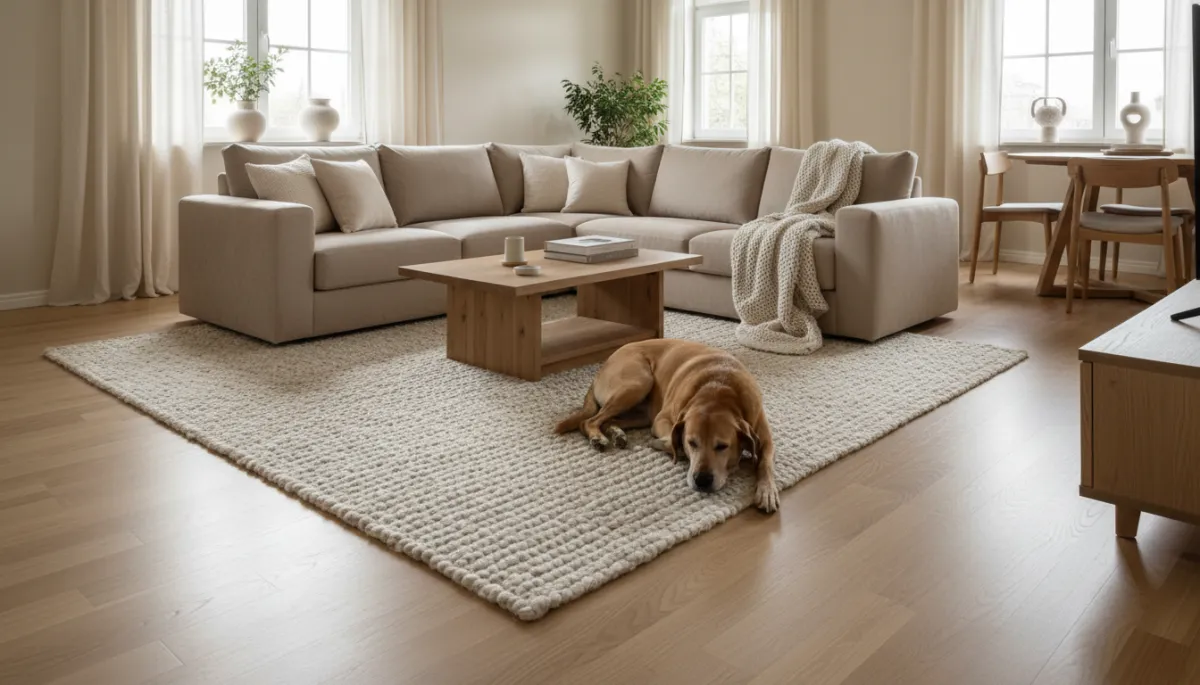
Washable rugs and durable fabrics keep busy pet spaces looking polished every day.
Stylish Pet Decor That Blends With Your Aesthetic
Gone are the days when pet accessories had to be bright plastic eyesores. Today’s stylish pet decor is designed to blend seamlessly into your home. Think of your pet’s belongings as part of your overall decorating plan, not an afterthought. When you choose pieces intentionally, beds, bowls, and toys can actually enhance your space instead of cluttering it.
Elevated Beds and Cozy Nooks
A pet bed does not have to scream “pet bed.” Look for designs that echo your furniture: simple lines, neutral fabrics, and natural textures like wood or woven fibers. In a warm neutral home, creamy bouclé, sand-colored canvas, or caramel faux leather can all look right at home while still being comfortable for your pet.
Place beds near windows, sofas, or your desk so your pet can be close to you and the action, which reduces anxiety and destructive behavior.
Consider built-in nooks under benches or side tables that double as functional pet spaces and attractive furniture.
Beautiful Feeding Stations and Storage
Food and water bowls are another opportunity for stylish pet decor. Swap mismatched plastic bowls for ceramic, stainless steel, or stoneware in soft, earthy tones. A simple tray or low-profile mat underneath keeps spills contained and visually anchors the area, just like a bar cart or coffee station would for humans.
For toys, leashes, and grooming supplies, attractive baskets, lidded bins, or a dedicated cabinet keep clutter out of sight. Woven baskets in natural fibers like jute or seagrass fit beautifully into a warm neutral palette and are easy to move from room to room.
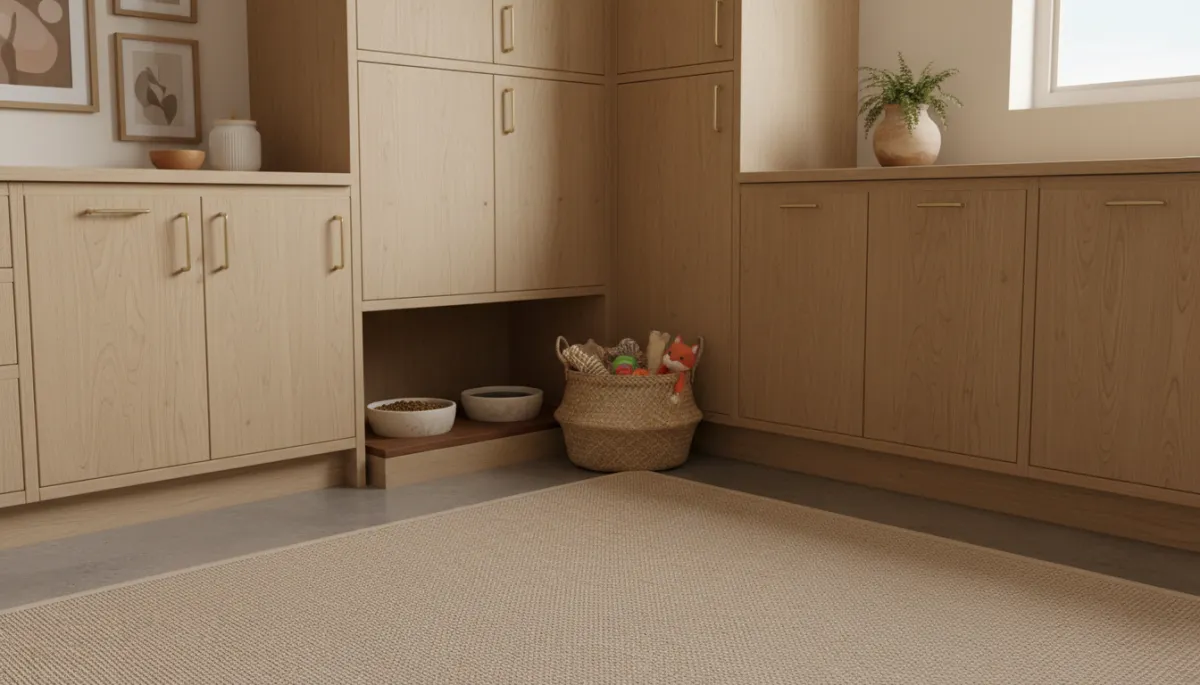
Thoughtfully designed feeding zones keep essentials handy while maintaining a calm, cohesive look.
Decorating With Pets in Mind: Layout and Flow
Decorating with pets is as much about layout as it is about style. The way you arrange your furniture can either support your pet’s natural behavior or work against it. Thoughtful placement helps protect your favorite pieces, improves home safety for pets, and makes day-to-day life more relaxing for everyone.
Create Clear Zones for Different Activities
Just like you might have a reading corner or a workspace, your pet benefits from dedicated areas to sleep, play, and eat. These functional pet spaces do not need to be large; they just need to be clearly defined and consistent so your pet knows what to expect.
Keep play zones away from fragile decor and electronics; a soft rug or mat can signal “this is where we wrestle and chew.”
Place sleeping areas in quieter corners so your pet has a retreat when guests come over or the household is busy.
Keep feeding stations away from doors and major walkways to prevent spills and tripping hazards.
Protect High-Value Pieces With Smart Placement
If there are items you absolutely love—an heirloom chair, a delicate floor lamp, a favorite planter—think about how to protect them without turning your home into a no-go zone. You might:
Move fragile objects to higher shelves or wall-mounted displays, especially if you have a curious cat or a tail-wagging dog.
Use side tables or console tables to create subtle barriers around vulnerable pieces without blocking light or airflow.
Place scratching posts or chew toys near, but not on top of, favorite furniture to redirect natural behavior.
💡 Friendly Tip: If your pet is repeatedly drawn to a certain spot, ask why. Is it sunny, cozy, or close to you? Try offering an attractive pet bed or perch there instead of constantly shooing them away.
Home Safety for Pets: Hidden Hazards in a Stylish Space
A truly pet-friendly home is not only beautiful; it is also safe. Some of the most popular decor items—candles, plants, cords, and small objects—can pose risks to curious animals. Fortunately, you can maintain your style while improving home safety for pets with a few simple adjustments.
Plants, Candles, and Scents
Many houseplants, including lilies, pothos, and some ferns, are toxic to cats and dogs. Before bringing a new plant home, quickly check whether it is safe. Opt for pet-friendly options like spider plants, certain palms, or herbs such as basil and rosemary, which also look lovely in warm neutral pots and planters.
For candles, consider flameless LED versions in realistic wax casings. They provide the same cozy glow without the risk of singed whiskers or tipped-over flames. If you enjoy diffusers or room sprays, keep them out of reach and avoid overwhelming scents that might irritate sensitive noses.
Cords, Small Objects, and Breakables
Loose cords from lamps, blinds, or electronics can be tempting chew toys or tangle risks. Use cord covers, clips, or cable boxes to bundle and hide them along baseboards or behind furniture. Not only does this improve home safety for pets, it also creates a cleaner, more polished look in your rooms.
Small decorative objects, like bowl fillers, beads, or tiny sculptures, can become choking hazards. Group your favorite pieces on higher shelves, mantels, or within glass-front cabinets where they can still be admired without being batted off a table or chewed.
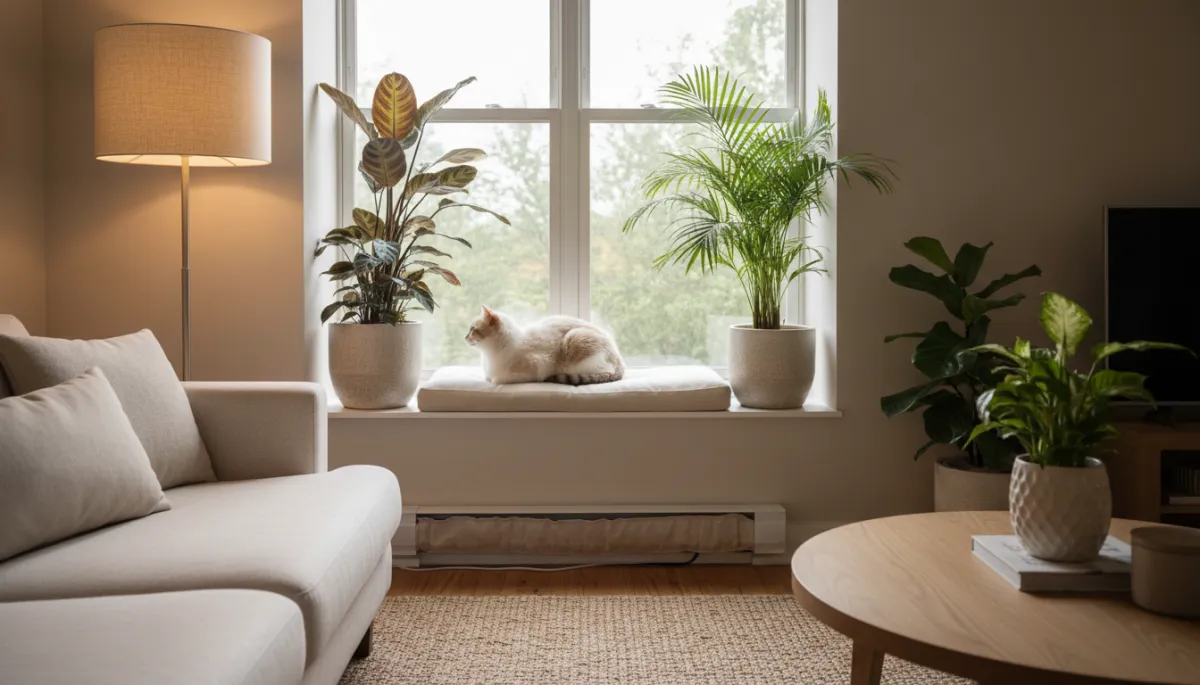
Smart safety choices, like pet-safe plants and hidden cords, keep curious animals out of trouble.
Functional Pet Spaces That Feel Like Part of the Design
Some pet needs are non-negotiable: litter boxes, crates, scratching posts, and climbing zones. Instead of trying to hide them completely, think about how you can integrate these functional pet spaces into your overall design. When these items are thoughtfully chosen and placed, they can look intentional rather than out of place.
Discreet Litter and Crate Solutions
For cats, furniture-style litter box enclosures are a game changer. Look for cabinets or benches in light oak, walnut, or painted finishes that match your existing pieces. They hide the box, control some odor, and provide an extra surface for decor like books or plants (kept pet-safe, of course).
Dog crates can also be integrated beautifully. Many brands now offer crate furniture that doubles as a sideboard or console table. In a warm neutral room, a wood or rattan-front crate with a comfy cushion inside can look like a stylish accent piece while giving your dog a safe den to retreat to.
Vertical Spaces and Enrichment Zones
Especially for cats and high-energy dogs, enrichment is key to preventing boredom and damage to your belongings. Wall-mounted shelves, window perches, and cat trees do not have to be bulky or bright. Look for slimline shelves in wood finishes, neutral-toned climbing posts, and perches that blend with your walls and trim.
For dogs, consider a dedicated “play station” with puzzle toys, chew toys, and a treat-dispensing mat. Store everything in a nearby basket when not in use. By giving your pet an appealing, designated place to expend energy, you protect your sofa cushions and table legs while supporting their well-being.
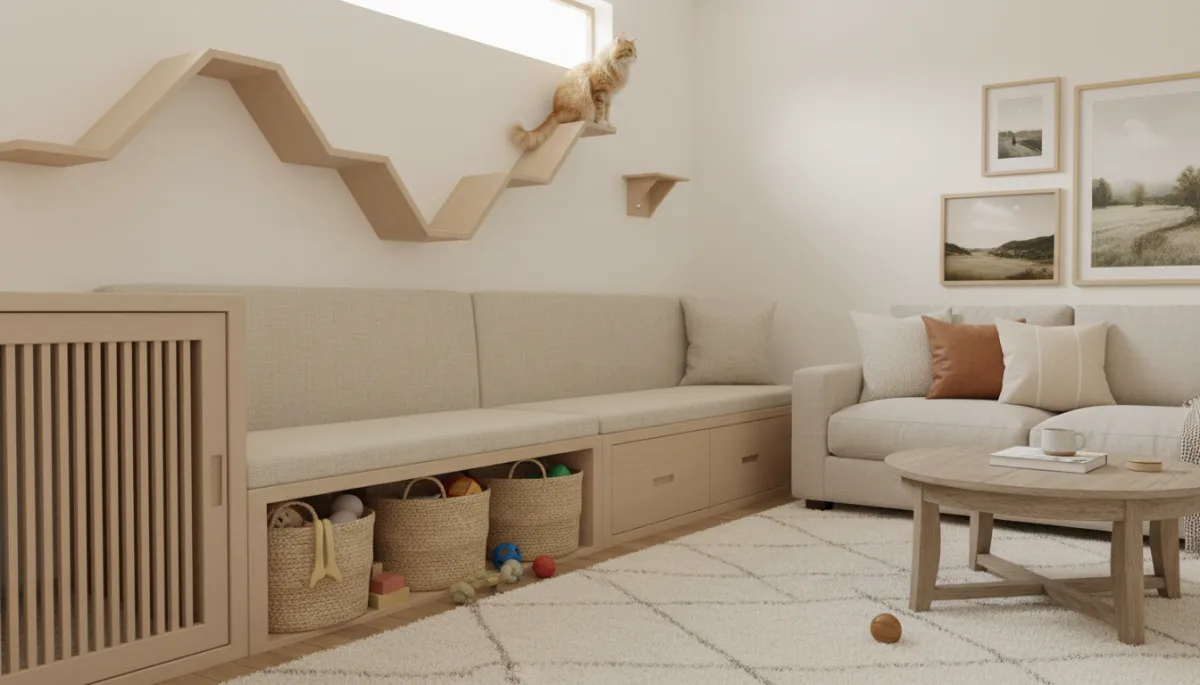
Integrated pet zones turn crates, beds, and toys into seamless parts of your decor.
Keeping Your Stylish, Pet-Friendly Home Looking Its Best
Even the most thoughtfully planned pet-friendly design needs a bit of regular care. The goal is not perfection; it is a home that feels lived-in, loved, and easy to maintain. A few simple habits help your stylish pet decor and furnishings stay fresh without eating up your weekends.
Groom regularly: Brushing your pet often reduces shedding on furniture and rugs and keeps them more comfortable.
Spot-clean quickly: Keep a small caddy of pet-safe cleaners, microfiber cloths, and an enzyme spray handy for accidents and muddy pawprints.
Rotate soft goods: Wash throw blankets, pillow covers, and pet bed covers regularly, and have backups so you can swap them out while one set is in the wash.
💡 Friendly Tip: Choose a consistent palette of warm neutrals for your textiles—think oatmeal, sand, caramel, and soft gray. When everything works together, you can mix and match pieces easily while still looking pulled together.
Bringing It All Together: A Home You and Your Pet Love
You do not have to choose between a beautiful home and a pet-friendly one. By planning your pet-friendly design thoughtfully, selecting smart pet-friendly materials, and embracing functional pet spaces as part of your decor, you can create rooms that feel warm, cohesive, and genuinely livable. The key is to work with your pet’s natural habits instead of constantly fighting them, and to treat their belongings with the same care and intention you bring to your own.
Whether you are refreshing a single room or rethinking your entire home, let your style and your pet’s comfort guide you side by side. With a calm palette of warm neutrals, stylish pet decor that blends in, and a few thoughtful safety upgrades, your space can feel like a sanctuary—for you and for the four-legged family members who make it truly feel like home.
